



Nigeria’s Fuel Crisis Explained: Subsidy Removal, Rising Prices, and the Dangote Refinery Tensions
By Comfort Chukwukelue
Nigeria’s ongoing petroleum crisis did not emerge overnight, and it cannot be traced to a single decision or institution. It is the outcome of policy changes, market realities, regulatory disputes, and long-standing structural weaknesses in the country’s oil and gas sector.
Since President Bola Ahmed Tinubu assumed office in May 2023, one policy decision has shaped Nigeria’s economic and energy conversation more than any other: the removal of fuel subsidy.
On May 29, 2023, the President announced the end of petrol subsidy, a system through which the government had for decades absorbed part of the cost of Premium Motor Spirit to keep pump prices low. The immediate effect was a sharp rise in fuel prices across the country. Petrol, which previously sold for about ₦185 to ₦200 per litre, rose to over ₦500 and later climbed to between ₦850 and ₦1,000 per litre in many areas.
This increase triggered higher transportation costs, rising food prices, and increased costs for goods and services. For many Nigerians, especially low-income earners and small business owners, mobility and productivity became more difficult.
The Federal Government defended the decision by stating that subsidy removal was necessary to stop revenue leakages, reduce pressure on public finances, encourage private sector participation, and fully deregulate the downstream petroleum sector. However, the social and economic impact has remained severe and continues to fuel public debate.
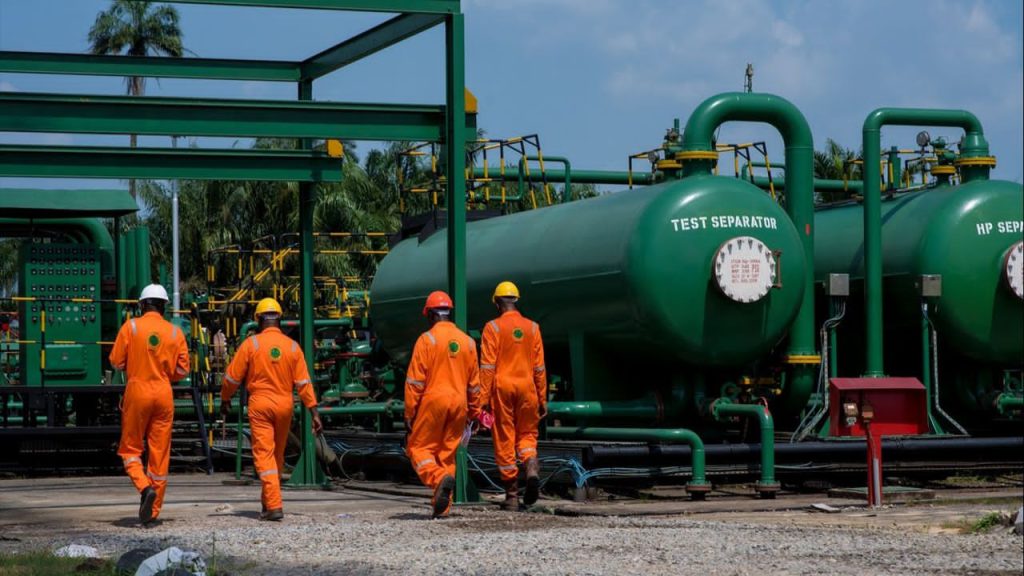
Amid this situation, the Dangote Petroleum Refinery emerged as a potential solution. Valued at about 20 billion dollars and located in Lekki, Lagos, the refinery has a capacity of 650,000 barrels per day, making it the largest single-train refinery in Africa. Expectations were high that local refining would reduce Nigeria’s dependence on fuel imports, conserve foreign exchange, improve fuel availability, and help stabilise prices.
In 2024, the refinery began producing refined products such as diesel and aviation fuel, and later petrol. At various points, its entry into the market coincided with temporary reductions in fuel prices, reinforcing public hope that domestic refining could bring relief.
However, refining alone requires a steady supply of crude oil. Under the Petroleum Industry Act, there is a provision for Domestic Crude Supply Obligation, which prioritises crude supply to local refineries. To support this, the Federal Government approved a naira-for-crude arrangement in late 2024, allowing the Nigerian National Petroleum Company Limited to sell crude oil to local refineries in naira rather than in United States dollars. The goal was to reduce foreign exchange pressure, lower production costs, and ultimately reduce fuel prices.
This arrangement later broke down. Dangote Refinery publicly alleged that it did not receive sufficient crude supply from NNPC Limited under the naira-for-crude framework. NNPC Limited, in response, suspended the arrangement, explaining that much of Nigeria’s crude oil had already been committed through forward-sale agreements and other contractual obligations.
As a result, the refinery reportedly had to source crude oil from international markets using foreign currency. This increased production costs and limited its ability to price fuel competitively within Nigeria. NNPC Limited has maintained that its challenges were linked to existing commitments and production constraints.
The disagreement later moved into the legal space. In late 2024, Dangote Refinery filed a 100 billion naira lawsuit against NNPC Limited, the Nigerian Midstream and Downstream Petroleum Regulatory Authority, and other parties. The refinery alleged that regulators continued issuing petrol import licences to marketers despite local refining capacity, a move it claimed distorted competition and undermined domestic production.
In 2025, a Federal High Court dismissed preliminary objections seeking to stop the case and allowed it to proceed. As of now, no final judgment has been delivered.
In addition to the lawsuit, Dangote Refinery has filed formal petitions alleging regulatory bias, misuse of office, and anti-competitive practices. It is important to clarify that these claims remain allegations, no court has established wrongdoing, and the regulatory agencies involved have denied the accusations.
Meanwhile, fuel prices have remained unstable. Temporary price reductions are often followed by new increases, while supply uncertainty continues to raise fears of scarcity. Analysts note that even with local refining, fuel prices are still influenced by international crude prices, exchange rates, distribution costs, and logistics. Local refining alone does not automatically guarantee cheap fuel without consistent crude supply and stable policy enforcement.
For ordinary Nigerians, the consequences are visible in daily life. Transport fares remain high, food prices continue to rise, and purchasing power has declined. Businesses face higher operating costs, reduced margins, and difficulty planning due to price instability. Investors also express concern about regulatory uncertainty and policy consistency.
The Federal Government maintains that deregulation is necessary for long-term sustainability and that market forces should determine prices, while insisting that domestic refining remains a national priority. The private sector, particularly local refiners, argues that without guaranteed crude supply and fair regulatory enforcement, domestic refining cannot deliver its full benefits.
If the current challenges persist, analysts warn that fuel price volatility may continue, public trust may further erode, and investment confidence could weaken. However, if resolved through enforced domestic crude obligations, transparent regulation, stable naira-for-crude mechanisms, and clear separation of commercial and regulatory roles, Nigeria could still achieve energy security, reduced import dependence, and long-term price stability.
Nigeria’s petroleum crisis is not simply about fuel prices. It is about policy coherence, regulatory trust, economic justice, and governance. The Dangote Refinery represents a major private investment, while the Federal Government represents national policy direction. How this tension is resolved will determine whether deregulation brings relief or deepens hardship for millions of Nigerians.

