



WHY TRANSMISSION COMPANY OF NIGERIA (TCN) CANNOT BE THE WEAKEST LINK IN THE SUPPLY CHAIN, WITH RESPECT TO WHEELING CAPACITY.
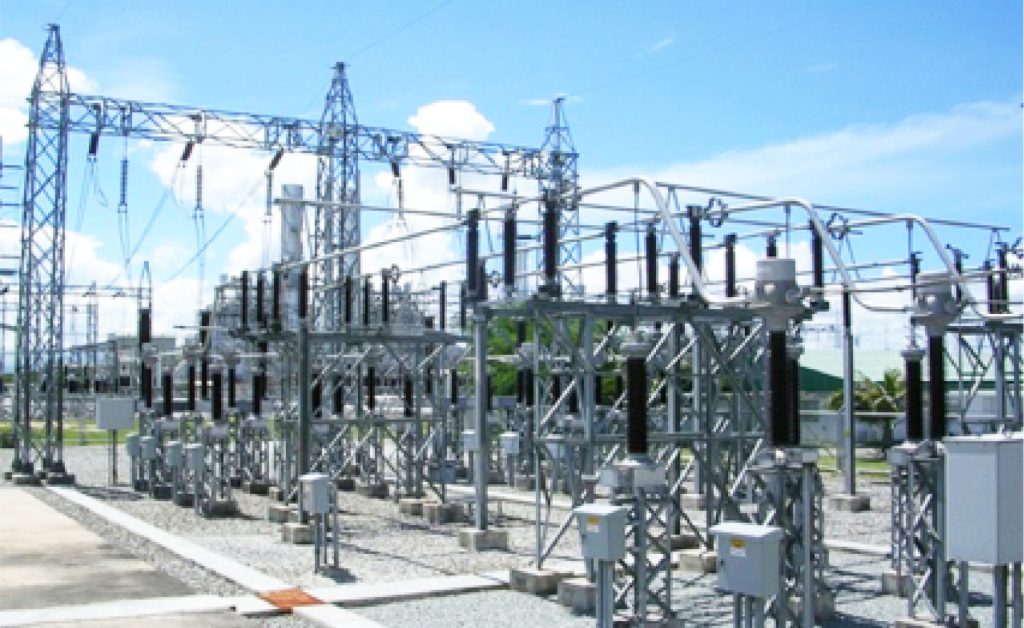
Many writers have opined that Transmission Company of Nigeria (TCN) is the weakest link in the supply chain probably because of supply not meeting energy demanded, that TCN cannot wheel up to 7000MW. Transmission Company of Nigeria being a revenue generating parastatal cannot relent on delivering services on the grid where she earns her revenue. Data gathered from the local station consumption exercise in June 2022 had it that there are about ninety (90) 330kV transmission lines, over one-hundred and forty (140) 132kV lines and over 300 power transformers ranging from 30MVA to 300MVA
For this analysis and probably clarity purpose with the figures mentioned, we may assume a power factor between 0.8 and 0.95 as the case may be depending on system configuration or power quality to determine the wheeling capacity of Transmission Company of Nigeria in terms of evacuation, for both the lines and the transformers.
Oftentimes the relay settings for 330kV lines could range from 1500A to 2000A and 800 to 1200A for 132kV lines, with system stability and other constraints in mind.
Typically, the maximum load a 330kV and 132kV transmission lines can carry is not a single fixed value. It depends on several engineering factors such as:
Conductor type and size
Number of conductors per phase (single, twin, quad bundle)
Line length
Thermal limits
Stability limits
Voltage regulation limits
Environmental conditions
THERMAL CAPACITY (COMMON PRACTICAL RANGE)
For many 330kV transmission lines, the current rating is typically around: 1200A to 2000A per phase, and a power factor say 0.85.
For instance; If current is 1000A, expected load is about 485MW
For 132kV overhead lines, the load is around 155MW
Many 330kV and 132kV lines in the Transmission Company of Nigeria (TCN) grid typically operate around: 400-700MW and 150-200MW per line respectively depending on conductor type and stability limits.
Considering the minimum values of 330kV and 132kV lines with respect to the number on the grid.
Line
Min. Value (MW)
Number on the Grid
Total Capacity (MW)
330kV Line
400
92
36,800
132kV Line
150
141
21,150
GRID TOTAL
57,950
Table 1.0
Line
Min. Value (MW)
Number on the Grid
Total Capacity (MW)
330kV Line
300
92
27,600
132kV Line
110
141
15,510
GRID TOTAL
43,110
Let’s even reduce this say because of line limitations and other constraints to this;
Table 1.1
FOR THE TRANSFORMERS CAPACITY.
A transformer is rated to carry megavolt-ampere of apparent power, not directly megawatts. The actual load in megawatts depends on the power factor of the connected load. Let’s take a random selection of transformers for instance, at 0.85 power factor.
DISCO FRANCHISE
TOTLAL NUMBER OF TRANSFORMERS
30MVA (25.5MW)
60MVA (51MW)
40MVA (34MW)
45MVA (38.2 MW)
Max. Power (MW)
MVA/MW USED
ABUJA
35
10
19
3
3
1140.0
60MVA
BENIN
31
X
X
X
X
790.5
30MVA
ENUGU
31
X
X
X
X
1581.0
60MVA
EKO
40
X
X
X
X
1360.0
40MVA
IBADAN
50
X
X
X
X
1700.0
40MVA
IKEJA
51
X
X
X
X
1948.2
45MVA
JOS
23
X
X
X
X
1173.0
60MVA
KADUNA
26
X
X
X
X
993.2
45MVA
KANO
30
X
X
X
X
1530.0
60MVA
YOLA
15
X
X
X
X
510.0
40MVA
TOTAL CAPACITY
13,370.50
Table. 1.2
The MVA/MW used were based on an average basis of what exists within the franchise area, and the total transformer capacity could be even more when actual capacities are used. Transformers of 100MVA, 150MVA and 300MVA are not included.
Note: This data and analysis were carried out with some transmission lines and substations under consideration; either unavailable or proposed, as at June 2022.
However, some writers have persistently argued that the Nigeria’s transmission network, operated by the Transmission Company of Nigeria (TCN), has an installed wheeling capacity often cited around 7,000-8,500MW, and that the grid frequently struggles to evacuate more than about 5,000-5,500MW. Be that as it may, this limitation arises from several structural and operational constraints across the power system. Nonetheless, what exists is as shown in table 1.0, 1.1 and 1.2 in practice.
ENERGY OR LOAD DEMAND.
Current Electricity Supplied on the Grid (MW)
Nigeria currently delivers about 4,000-5,700MW on average through the national transmission grid.
Peak generation recorded around 5,713MW in March 2025.
Average daily generation distributed in 2025 was roughly 5,700MW.
Daily Energy Delivered: The highest daily energy transmitted recently is about:
125,542MWh per day.
To interpret this:
125,542MWh/day is about 5,230MW average load.
So, Nigeria’s actual grid consumption is roughly 5-6000MW.
Nigeria’s Real Electricity Demand (Estimated)
Nigeria’s true electricity demand is far higher than what the grid supplies.
Energy studies estimate that Nigeria would require roughly: 30,000-40,000MW to meet current national demand if reliable electricity were available. (Estimated)
Official Demand Projections
The Nigerian Electricity Regulatory Commission projects that:
Electricity demand could reach about 45,662MW by 2030.
This projection reflects:
population growth
industrialization
electrification of rural areas
increased urbanization
Electricity Demand vs Supply Gap
Indicator
Value
Current grid supply
Around 5,000-5,700MW
Installed generation capacity
Around 13,000MW
Estimated real demand today
Between 30,000-40,000MW
Projected demand by 2030
Around 45,000MW
Demand Gap
Nigeria currently supplies only about: 5,500/35,000 = ≈15% of its estimated electricity demand.
5. Comparison with Other Countries
Country
Population
Peak Demand
South Africa
60 million
Around 34,000MW
Egypt
110 million
Around 35,000MW
Nigeria
220+ million
Around 5,500MW supplied
Nigeria’s electricity supply per capita is therefore among the lowest in the world for a major economy.
6. Why Demand Appears Artificially Low
Nigeria’s “official demand” is suppressed because:
Industries run diesel generators (15-20000MW estimated)
Households rely on small petrol generators (“I better pass my neighbor”)
Weak distribution networks reject load
Many rural communities are not connected to the grid
Thus, grid demand ≠ real energy demand.
In any case, if the actual lines and transformers capacities available are computed, transmission wheeling strength can still do up to 85% of the estimated demand as shown in tables 1.0, 1.1 and 1.2, which would be above 25,000MW the least.
Transmission Company of Nigeria (TCN) may be said to be a weak link but not the “weakest link” in the supply chain as opined by many writers and speakers.
WHY SUPPLY APPEARS LOWER THAN DEMAND
Why Nigeria’s transmission grid still struggles to evacuate more than about 5,500MW despite many lines and transformers, is an important system-stability and grid architecture issue.
1. Weak Grid Topology and Radial Configuration
Nigeria’s transmission grid was historically developed in a radial pattern rather than a strongly meshed network.
Implications:
Power flows are forced through a few critical corridors.
Failure or congestion in one line affects large regions.
Limited redundancy reduces overall transfer capability.
Some networks suffer corridor congestion and thus limits power evacuation (e.g, Zungeru HPP and Ihovor PP)
Many generating plants in the south must transmit power northward through narrow transmission corridors, creating bottlenecks.
2. Transmission Line Thermal and Stability Limits
Although a typical 330kV line can theoretically carry 600-900MW, system operators cannot load all lines to their thermal limits due to grid stability constraints.
Two major technical limits apply:
Angular Stability
Large power transfers across long distances risk loss of synchronism between generators.
Voltage Stability
Long lines require reactive power support; without it, voltage collapses may occur.
Because of these limits, operators of the grid keep flows well below theoretical capacity.
3. Inadequate Reactive Power Compensation
High-voltage networks require reactive power support devices such as:
Static VAR Compensators (SVC)
Shunt capacitors
Nigeria’s grid has insufficient reactive power compensation, leading to:
Voltage instability
Reduced transfer capability
Frequent load rejection
Without these devices, the system cannot safely carry higher power flows.
4. Aging and Overloaded Transmission Infrastructure
Many substations and transformers in the grid are 30-40 years old or even more.
Common problems include:
Transformer overloading
Protection limitations
Outdated switchgear
High forced outage rates
Even if transmission lines can carry more power, substation equipment becomes the bottleneck.
5. Generation-Transmission Mismatch
Most generation is concentrated in gas-fired plants in the Niger Delta, including plants connected near:
Delta
Rivers
Edo states
Power must travel long distances (500-900km) to reach major northern load centers.
Long-distance transmission increases:
System losses
Stability risks
Transfer limitations
This geographic imbalance constrains grid evacuation capacity.
6. Poor Grid Automation and Real-Time Control
Modern power systems rely heavily on advanced control technologies such as:
SCADA
Automated dispatch optimization
Nigeria’s grid control infrastructure remains limited, reducing operators’ ability to push the system close to safe operating limits.
7. Distribution Network Constraints
Even when the transmission system can deliver more power, distribution companies cannot absorb it.
Distribution networks operated by companies like:
Abuja Electricity Distribution Company
Ikeja Electric
Eko Electricity Distribution Company, among others
often experience:
overloaded feeders
inadequate transformers
high technical losses
As a result, the System Operator may reject generation because the distribution network cannot safely receive additional load and for system stability sake.
8. High ATC&C Losses
Nigeria’s power sector suffers from very high Aggregate Technical, Commercial and Collection (ATC&C) losses, sometimes exceeding 40% in certain distribution networks.
High losses reduce:
financial viability of dispatch
incentive to increase generation
ability to expand infrastructure
Thus, even when generation is available, the system cannot economically support higher dispatch.
9. Frequent Grid Disturbances
The Nigerian grid experiences periodic partial or total system collapses.
These are often caused by:
Sudden generator trips
DisCos load drops/rejection
Transmission faults
Inadequate frequency control
To prevent collapses, the system operator maintains large stability margins, effectively limiting total power transfer.
10. Limited Redundancy and N-1 Security
Modern grids are designed to satisfy N-1 reliability criteria, meaning the system should withstand the loss of any single major component.
In Nigeria:
Many corridors cannot maintain supply if one line fails.
Operators therefore limit power flows to avoid cascading outages.
This operational caution significantly reduces usable capacity.
11. Governance and Management of Resources.
Government has a crucial and implicating role here in both the selection of Heads and subsequent management of resources in the sector.
Impact on Sector Performance: The ongoing issues in the electricity supply chain-such as inadequate infrastructure and poor service delivery can often be traced back to ineffective leadership and decision-making.
Lack of Technical Expertise: Many Heads have been criticized for lacking the necessary technical background and understanding of the complex power sector. This has led to ineffective policy implementation and oversight.
Accountability and Transparency: Improving accountability in the management of the power sector remains a critical priority. Allegations of corruption, weak governance structures, and the misallocation of funds intended for infrastructure development have raised serious concerns. Establishing robust financial controls, transparent procurement systems, and enforceable accountability frameworks is necessary to ensure that investments in the power sector translate into tangible improvements in electricity supply and system reliability.
Summary of Key Constraints
Constraint
Effect on Grid Capacity
Radial transmission structure
Power bottlenecks
Stability limits
Lines cannot operate at thermal capacity
Poor reactive power support
Voltage instability
Aging substations
Transformer bottlenecks
Generation location imbalance
Long-distance power transfer limits and congestion
Weak distribution networks
Load rejection
High ATC&C losses
Financial constraints
Limited grid automation
Conservative system operation
Governance and Management of Resources
Poor management of personnel and resources
Conclusion
Nigeria’s power challenge is not simply that Transmission Company of Nigeria, (TCN) is the weakest link due to insufficient transmission lines and substations, but rather a structurally weak and poorly balanced power system. Transmission capacity is constrained by stability, infrastructure age, inadequate reactive support, and distribution network limitations.
Addressing these issues requires:
Large-scale grid reinforcement
Modern system control technologies
Improved distribution infrastructure
Stronger sector governance
Only then can the national grid reliably evacuate 10,000MW or more, which is very possible to do and widely considered necessary for sustained economic growth.
Engr. Dugeri Maurice A.
Transmission System Operator, Abuja.
8th March 2026.
References
Federal Ministry of Power. (2021). National Integrated Power Policy. Abuja: Government of Nigeria.
World Bank. (2022). Nigeria Power Sector Recovery Program. Washington DC: World Bank.
Transmission Company of Nigeria (TCN). (2022). TCN local station consumption exercise. Abuja: TCN.
International Energy Agency (IEA). (2023). Nigeria Energy Outlook. Paris: IEA.
Nigerian Electricity Regulatory Commission (NERC). (2023). Annual Power Sector Performance Report. Abuja: NERC.
Transmission Company of Nigeria (TCN). (2025). Nigeria records peak power generation of 5,713.6 MW and highest daily energy of 125,542 MWh. Abuja: TCN.
Nairametrics. (2025). Nigeria’s power generation hits record 5,801.84 MW and daily energy of 128,370.75 MWh. Lagos: Nairametrics Energy Desk.
Guardian Nigeria. (2025). Power generation hits 5,713.60 MW – Transmission Company of Nigeria statement. Lagos: Guardian Newspapers.
The Cable. (2025). TCN announces new peak power generation of 5,713 MW. Lagos: Cable Newspaper Ltd.
The Nation Newspaper. (2025). Nigeria’s power generation hits 5,713 MW, highest in four years. Lagos: Vintage Press Ltd.
Radio Nigeria News: Power generation hits 5,713MW – TCN- FRCN HQ, March 4, 2025

